was successfully added to your cart.

Cart

Category

Other

Orthotics – Wearing them in

Wearing in your Orthotics


Instructions

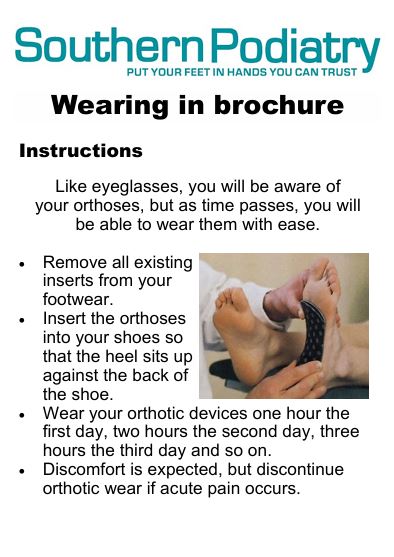
Like eyeglasses, you will be aware of your orthoses, but as time passes, you will be able to wear them with ease.

  • Remove all existing inserts from your footwear.
  • Insert the orthoses into your shoes so that the heel sits up against the back of the shoe.
  • Wear your orthotic devices one hour the first day, two hours the second day, three hours the third day and so on.
  • Discomfort is expected, but discontinue orthotic wear if acute pain occurs.

Troubleshooting

  •  Your orthoses may require some small change or adjustment. These adjustments are made in accordance with the changed position your feet are assuming because of improved function.
  • Try to purchase shoes that have a deeper heel seat or higher cover, or an orthotic friendly shoe.
  • A six week review is recommended after you start wearing your devices to ensure fit and comfort is adequate.


Severs Disease Information

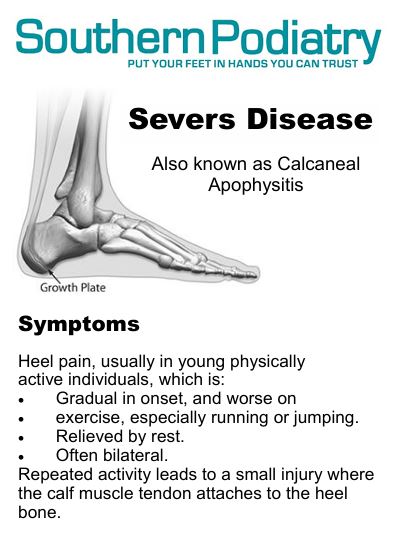
Severs Disease

Also known as Calcaneal Apophysitis

Symptoms

 Heel pain, usually in young physically active individuals, which is:

  • Gradual in onset, and worse on
  • exercise, especially running or jumping.
  • Relieved by rest.
  • Often bilateral.

Repeated activity leads to a small injury where the calf muscle tendon attaches to the heel bone.

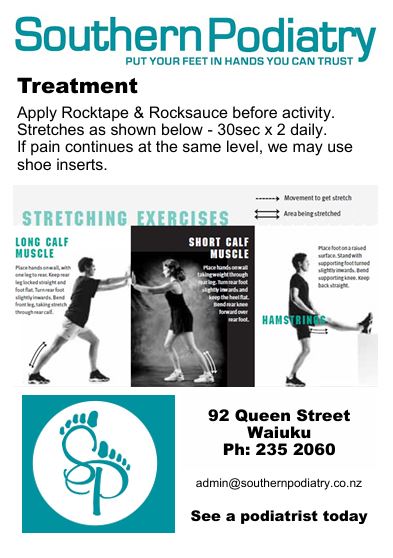
Treatment

 Apply Rocktape & Rocksauce before activity.

Stretches as shown below – 30sec x 2 daily.

If pain continues at the same level, we may use shoe inserts.

Orthotic Devices Information

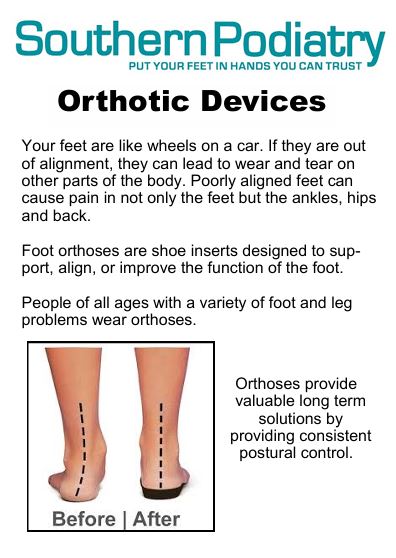
Orthotic Devices

Your feet are like wheels on a car. If they are out of alignment, they can lead to wear and tear on other parts of the body. Poorly aligned feet can cause pain in not only the feet but the ankles, hips and back.

Foot orthoses are shoe inserts designed to support, align, or improve the function of the foot.

People of all ages with a variety of foot and leg problems wear orthoses.

Orthoses provide valuable long term solutions by providing consistent postural control.

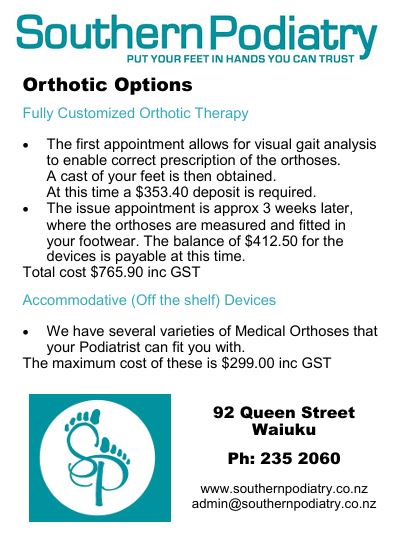
Orthotic Options

Fully Customized Orthotic Therapy

  • The first appointment allows for visual gait analysis to enable correct prescription of the orthoses. A cast of your feet is then obtained. At this time a $353.40 deposit is required.
  • The issue appointment is approx 3 weeks later, where the orthoses are measured and fitted in your footwear. The balance of $412.50 for the devices is payable at this time.
  • Total cost $765.90 inc GST.

Accommodative (Off the shelf) Devices

  • We do have several varieties of Medical Orthoses that your Podiatrist can fit you with. If you are interested in one of these options, we are happy to discuss these with you.


Plantar Heel Pain Information

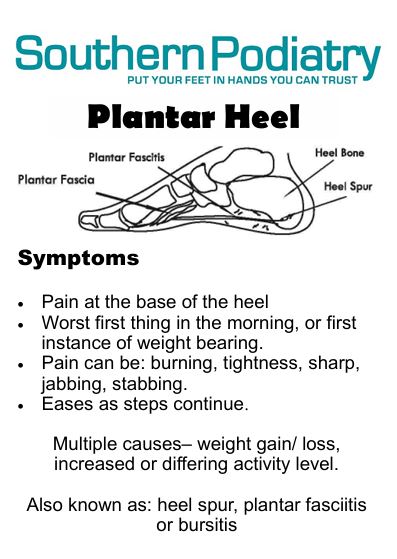
Plantar Heel Pain


Symptoms

  • Pain at the base of the heel.
  • Worst first thing in the morning, or first instance of weight bearing.
  • Pain can be: burning, tightness, sharp, jabbing, stabbing.
  • Eases as steps continue.

Multiple causes, such as – weight gain/ loss, increased or differing activity level.

Also known as: heel spur, plantar fasciitis or bursitis.

Treatment

  • Modify footwear– fasteners ie: lace up, heel pads or cushioning can relieve pain.
  • Achilles & Hamstring Stretch (30sec/twice day).
  • Rocktape Strapping & Rocksauce (leave on for 3 – 5 days).
  • Orthotic intervention/ shoe inserts. Your Podiatrist can explain the benefit these devices can make long term.


Fungal Toe Nail Treatment

Treatment for Fungal Toe Nails


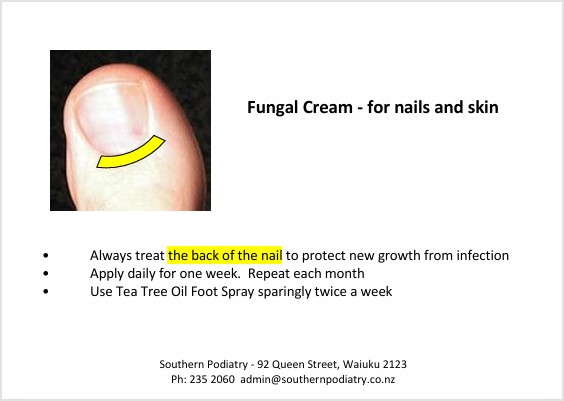
Use Anti-Fungal Cream – for nails & skin (Do not use this product between the toes).

  • Always treat the back of the nail to protect the new growth from infection.
  • Apply Lamisil Cream to each toe daily for one week, repeat each month (so one week on & three weeks off).
  • Use Tea Tree Foot Spray sparingly (one spray on each foot), twice a week.

Lamisil Cream & Tea Tree Foot Spray are available to purchase from the clinic.

These can be purchased as a combo (which saves you $10), or they can be purchased individually.

Are you considering ingrown toe nail surgery?

Do you have a recurring ingrown toenail and don’t know what to do?

Ingrown toenails are a common foot problem we see here at Southern Podiatry. The treatment methods vary depending on how advanced the problem is and the individual needs of the patient too, so we’ll always tailor a treatment to you.

For patients whose ingrown toenail issues are long-term and recurring, ingrown toenail surgery is likely to be the best option. When conservative and non-invasive treatments are unsuccessful, surgery removing the nail edge (which doesn’t grow back) can be a better permanent solution to avoid continual discomfort and pain.

When is it time to consider toenail surgery?

Partial Nail Avulsion

PNA surgery permanently removes the side of the nail that is causing damage to the skin. It is a quick & routine procedure, normally used in simple cases of ingrown toenails that can’t be resolved with conservative treatments. It’s also preferred as the majority of the nail can be left attached.
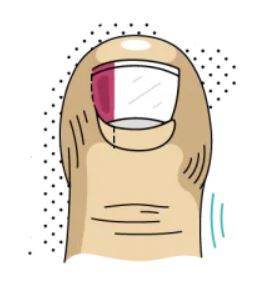
Benefits

  • A quick procedure – just 45 to 60 minutes
  • A normal-looking nail is left after healing
  • 98 per cent success rate
  • Fixes the issue permanently
  • A quick recovery time

Total Nail Avulsion

TNA surgery permanently removes the entire nail, normally carried out only when a severely damaged or thickened toenail causes recurring problems that the more simple PNA surgery will not fix. This is not the preferred treatment, but in rare cases it can be necessary to avoid future problems.
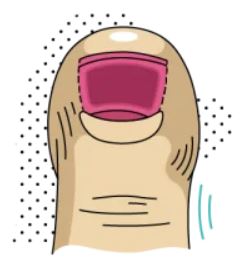
Benefits

  • A permanent solution for the nail
  • Won’t grow back
  • 98 per cent success rate
  • A quick procedure – just 45 to 60 minutes
  • Rapid recovery rates

The Procedure

It is a quick and simple solution for painful ingrown nails. Once the toe is numbed, there are just four steps to follow.

Step One

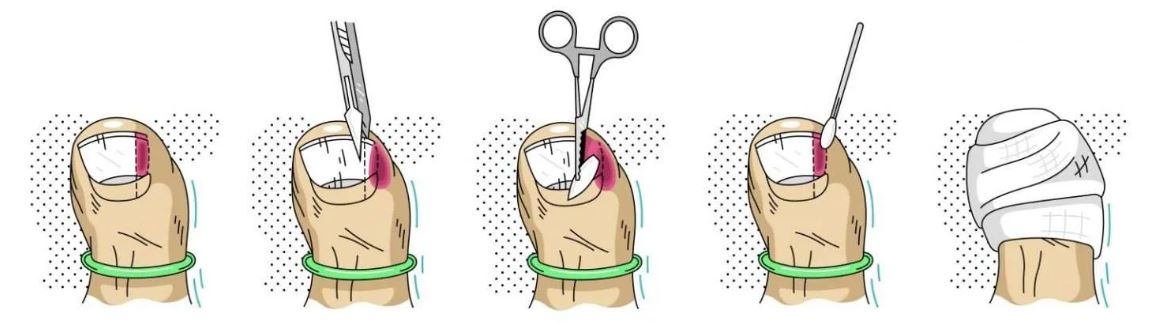
After the toe is numbed, a tourniquet is applied to limit blood flow and the nail edge is cut and split from the nail plate.

Step Two

The cut nail edge is gently removed from the nail fold and any remaining fragments are removed. Extra tissue that has grown over the site will also be removed at this point.

Step Three

The phenol acid is applied to destroy the nail matrix and the toenail is flushed with a clean solution.

Step Four

The tourniquet is removed, the toe dressed with an antibiotic ointment and bandaged, and you can go home and relax.

Woop Woop- New Location just around the corner- literally.

We are very excited to announce that we are on the move. Commencing on Thursday 2nd February, we relocate from 12 Bowen St to 92 Queen St, Waiuku. We are still operating in our old location in the meantime, and for those clients with appointments from 7th February onwards, we will see you in the new clinic.

The premises have a history of being the Waiuku Medical Centre, so we will feel right at home in them. New signage is going up as we write this, so expect to see our notices and logo from a different perspective.

Cohabiting with Aurora Law- very excited.

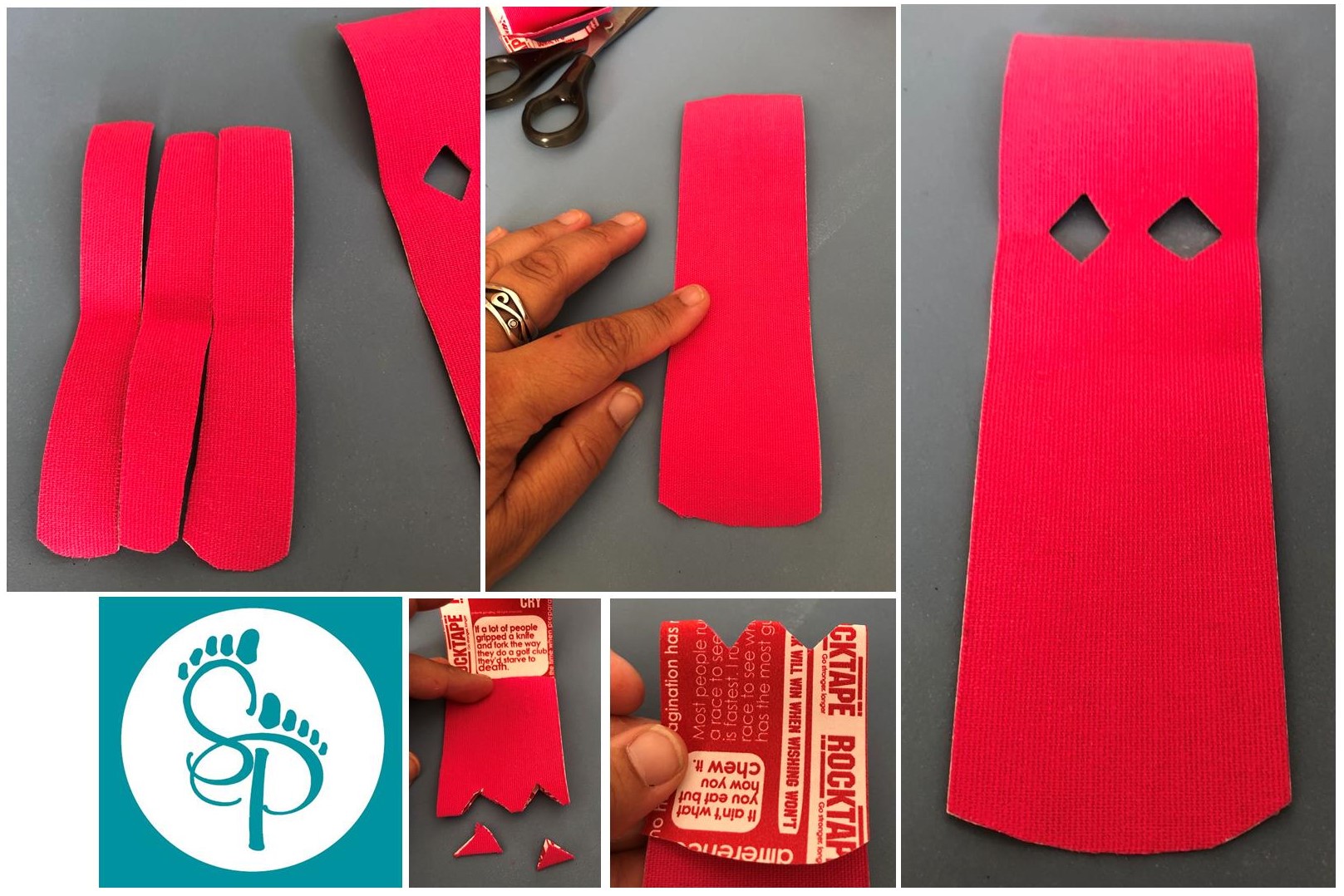
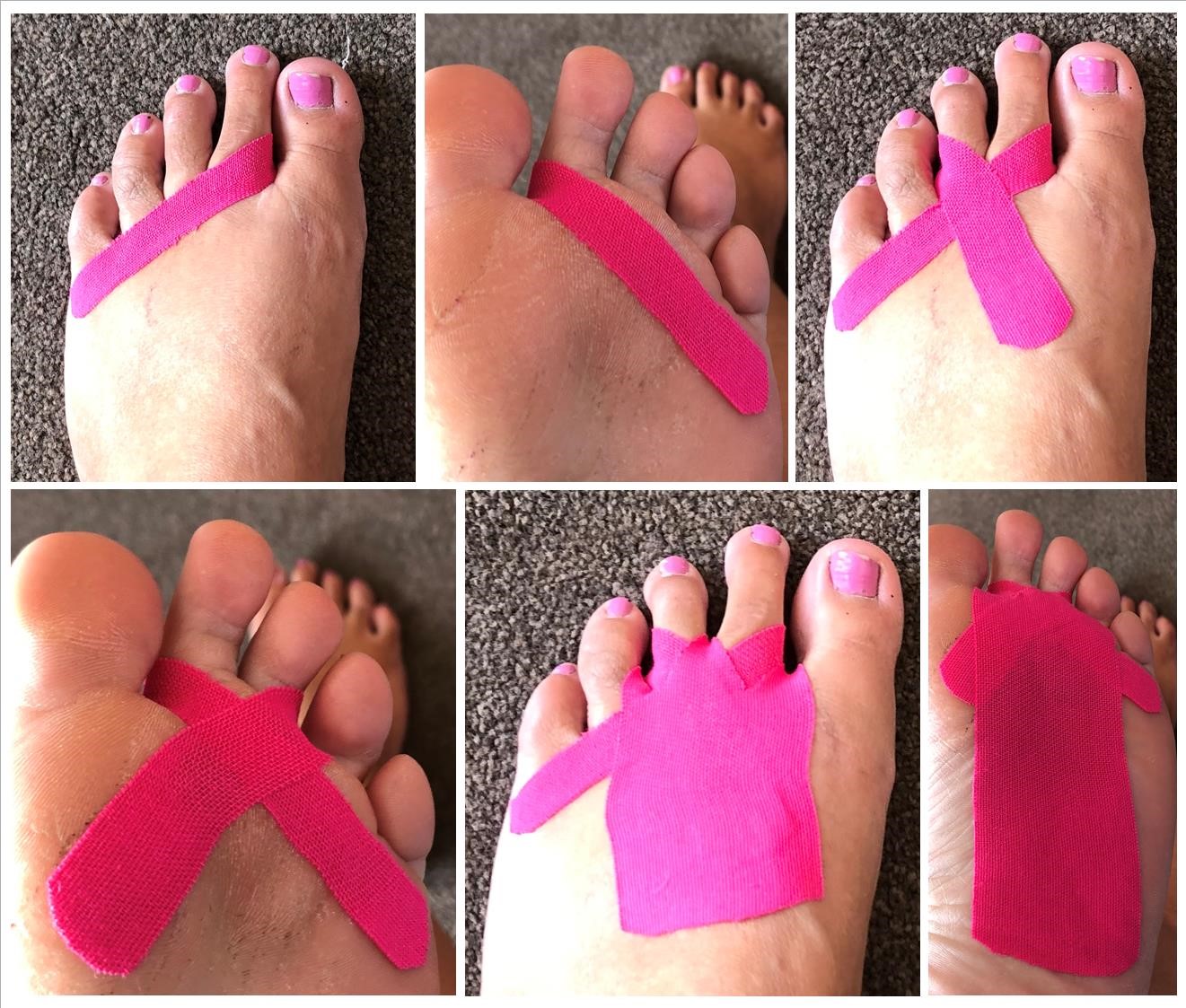
Plantar Plate Taping technique

Taping is something that gets easier the more you practice.

We have created a quick guide here for your reference. It is not a definitive guide, more of a recommendation to support a product that we absolutely love using.

Plantar Plate Taping- How to cut guide.
Plantar Plate Taping- How to apply guide.
The resources available on YouTube for Rocktape are also worth checking out.

Have fun, be creative and keep on moving.

https://www.youtube.com/watch?v=tbhiOOLeiwg

Time to head to Middlemore

Yes- you heard right. Me, myself and I- Miss Treena Harris- is headed to Middlemore Hospital. I haven’t been able to confirm it until now as my placement was very late notice but joyfully accepted. But remember this- it is only a loan. I will be coming back to Southern Podiatry.

hospital

Why?

Well- it is time. You may recall that I am a Registered Nurse as well as a Podiatrist. In order to keep our qualifications and receive an annual license to work within our profession of choice (also known as practicing certificates), you need to complete time in each profession.

What else do I need to let you know? Well…….. Continue Reading

Otago Rail Trail in all its glory.

Get on your bike and hit the road.

This is by far the best way to see the countryside and experience NZ. We were fortunate to use the services of a fabulous bicycle tour company called Cycle Surgery.

cycle-surgery-group-pose

We decided to ride in costume. Think fitness guru from the 80’s Richard Simmons and twist it with a dash of “Absolutely Fabulous”. Knee high socks, sweat bands, oversized glasses, a Hawaiian leis and a headband with pigtails and a bow- what a treat!

Continue Reading